


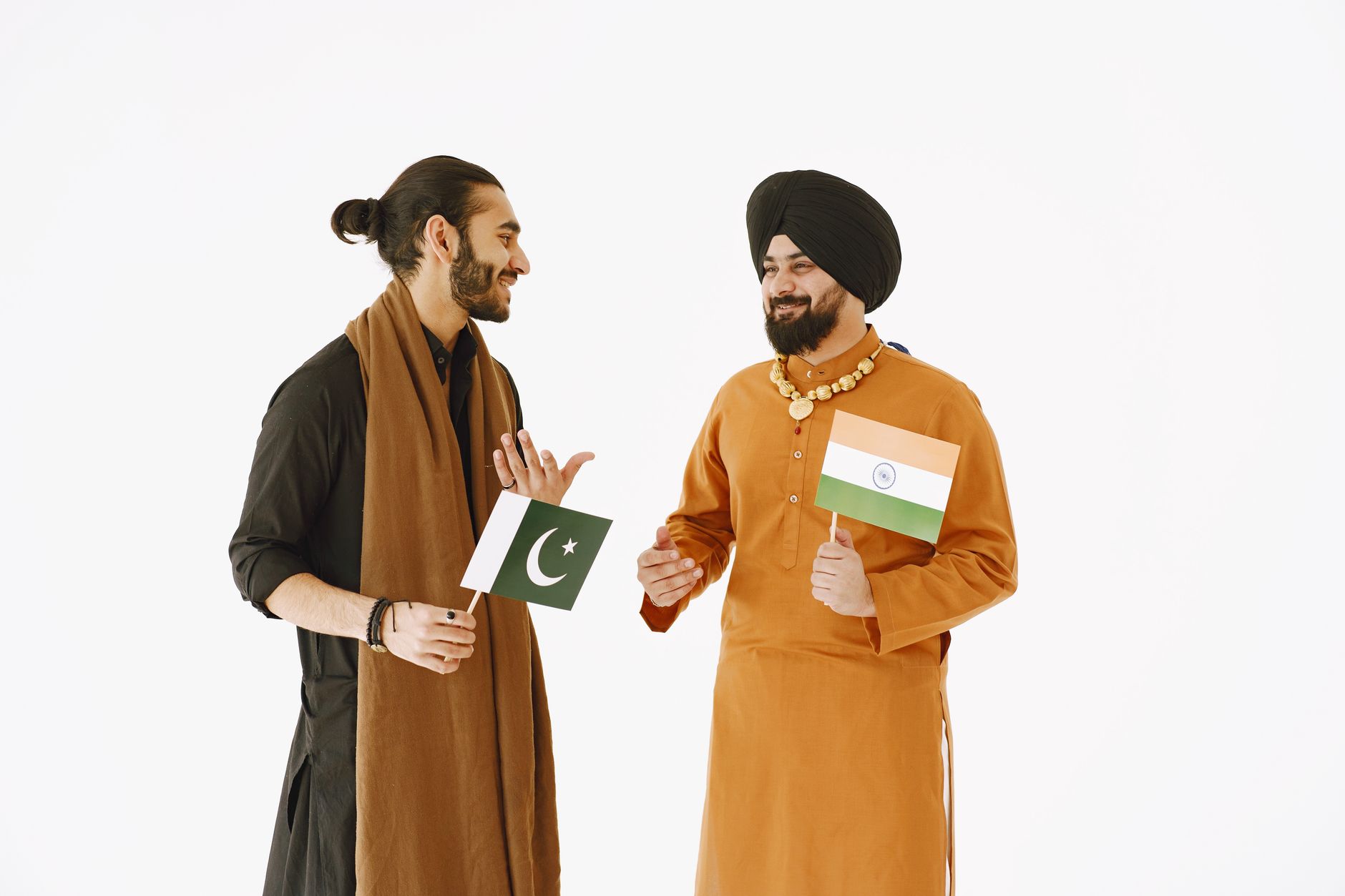
Indian friendships run deeper than words — they live in silences, shared chai, and showing up without being asked.
The Unspoken Rules of Indian Friendship Nobody Writes About
📅 July 08, 2026 | ⏱ 9 min read | Life Insights
It was 2 AM. You had a fight with your family — the kind that leaves you staring at the ceiling, chest heavy. You didn't post anything. You didn't call anyone. But somehow, within twenty minutes, your best friend was at your door with a packet of Kurkure and absolutely zero questions.
He didn't say "bro, tell me what happened." He just sat next to you, opened the packet, and put on some random YouTube video. That was it. That was everything.
No one taught him to do that. There's no book called How to Be an Indian Best Friend. And yet, he knew exactly what to do — because Indian friendship runs on a completely different operating system than what we see in Hollywood movies or self-help podcasts.
We talk a lot about Indian family pressure, Indian work culture, Indian marriage debates. But we almost never talk about the invisible rulebook that governs how we love our friends — the unwritten codes, the strange silences, the loyalty that never gets announced but always shows up.
What are the real, unspoken rules of Indian friendship — and why does understanding them change how you see every relationship in your life?
📖 In This Blog
This blog unpacks the unspoken, unwritten rules of Indian friendship culture — the codes we all follow but never name, and why they matter more than we realise.
- Why Indian friendships are built on presence, not words
- The "roast culture" paradox — how insults become love
- The silent loyalty code and what breaks it
- Why Indian friendships fade quietly — and what that says about us
📌 Note: This blog shares perspectives, not prescriptions. Think, question, and form your own view.
🤝 Showing Up Is the Whole Language
In Indian friendship, you don't say "I'm here for you." You just appear. At the hospital. At the railway station at 5 AM. Outside the exam hall with a bottle of Glucon-D. The showing up is the sentence.
Western friendship culture — at least as it's portrayed — is very verbal. "I love you, man." "You mean so much to me." "Let's schedule a call to check in." Indian friendship is almost allergic to that kind of language. It feels fake, filmy, embarrassing even.
👉 In Indian friendship culture, action is the vocabulary. Presence is the punctuation. And silence, often, is the deepest form of care.
Think about the last time a friend helped you move furniture, stood in a queue for your train ticket, or just sat with you during a bad day without saying a single useful thing. They weren't being lazy with words. They were being fluent in the only language that actually matters here.
But here's the thing — what happens when one friend starts expecting words, and the other keeps showing up silently? That's where the first crack appears. And it's a crack most of us never even name.
"A friend is someone who knows all about you and still loves you."
— Elbert Hubbard
😂 The Roast Is the Hug — Understanding Desi Insult Culture
Your friend calls you "gadha" in front of everyone. He mocks your haircut, your crush, your career choices, your weight — sometimes all in one sentence. And you're laughing. Because somehow, that feels like love.
This is one of the most misunderstood aspects of Indian friendship culture. From the outside, it looks brutal. A foreigner watching a group of Indian male friends interact would probably think they hate each other. But the roast is actually a trust signal — it means I'm comfortable enough with you to say the unsayable.
👉 In Indian friendships, the depth of the roast is often proportional to the depth of the bond. The harder the joke, the safer the space.
Of course, this has a shadow side. Sometimes the "joke" is actually a jab. Sometimes the roast becomes a way to say things we're too cowardly to say directly. And sometimes, people use "yaar, mazak tha" as a shield for genuine cruelty. The line is thin, and not everyone knows where it is. If you've ever wondered why we say yes when we mean no, this roast culture is part of the same pattern — we express real feelings through indirect channels.
So how do you know if the roast is love or damage? That answer might surprise you — and it has everything to do with what happens when the room goes quiet.
🔒 The Loyalty Code Nobody Explains But Everyone Enforces
There's a rule in Indian friendship that nobody writes down but everyone knows: you don't side with the outsider against your friend. Even if your friend is wrong. Even in public. You pull them aside later — but in the moment, you stand with them.
This is the loyalty code. It's tribal, it's old, and it's incredibly powerful. It's also the reason why Indian friend groups can feel like small, fiercely protective clans. Once you're inside, you're protected. Once you break the code — even once — the trust is almost impossible to rebuild.
Research on social bonding in collectivist cultures (like India) consistently shows that group loyalty is weighted far more heavily than individual honesty. A 2019 study published in the Journal of Cross-Cultural Psychology found that individuals from collectivist societies were significantly more likely to prioritise in-group harmony over factual correction — even when they privately disagreed. This isn't weakness. It's a completely different moral architecture.
👉 Indian friendship loyalty isn't blind — it's strategic. It says: "I'll fight you in private, but I'll die for you in public."
But this loyalty code also creates a dangerous silence. When your friend is genuinely going down the wrong path — addiction, a toxic relationship, a bad financial decision — the code makes it hard to speak up. We've written about how silence around difficult truths is quietly destroying Indian families — and the same silence operates in friendships too. So what happens when loyalty and honesty collide head-on?
"The glory of friendship is not the outstretched hand, not the kindly smile, nor the joy of companionship; it is the spiritual inspiration that comes to one when you discover that someone else believes in you and is willing to trust you with a friendship."
— Ralph Waldo Emerson
📱 The WhatsApp Group Is the New Mohalla — And It Has Its Own Politics
Every Indian friend group has at least three WhatsApp groups. The main one. The one without that one person. And the one that was made for a trip in 2019 and is now used to share memes at 1 AM.
The WhatsApp group is where Indian friendship culture has migrated in the digital age. It's the new adda, the new chai tapri. But it comes with its own unspoken rules: you don't leave the group without warning, you don't read-receipt someone's serious message and not reply, and you absolutely do not share what's said in the group outside the group.
👉 The WhatsApp group is not just a chat — it's a social contract. Leaving it is almost a declaration. Being removed from it is a wound.
There's also a subtler dynamic at play. The person who sends the most memes is often the one who's most emotionally unavailable. The one who goes silent for days is either deeply busy or quietly struggling. We've explored how young Indians are growing lonelier even while being constantly online — and the WhatsApp group is the perfect example of that paradox. You can be in five groups and still feel completely unseen.
And yet — when someone posts "bhai, need help" in that group at midnight, watch how fast people respond. That's the real magic. The group is dormant until it isn't. And when it activates, it activates completely.
🌫️ Why Indian Friendships Fade Without a Fight — The Quiet Drift
Most Indian friendships don't end in a dramatic fight. They end in a slow, quiet drift. One person gets a job in another city. Someone gets married. Someone starts a business. The calls become less frequent. The replies become shorter. And one day you realise — you haven't spoken in eight months, and neither of you has noticed.
This is the part nobody talks about. We celebrate the intensity of Indian friendships — the 3 AM calls, the hostel bonding, the "yaar tu toh mera bhai hai" declarations. But we don't talk about how those same friendships can dissolve without a single argument, without closure, without even a goodbye.
The drift happens because Indian friendship culture is often built around shared context — the same college, the same colony, the same office. When the context changes, the friendship has to be actively rebuilt. And most of us don't know how to do that. We never learned. Nobody taught us. Just like nobody tells you what to expect when you step into your first job and the social landscape completely shifts.
👉 The quiet drift isn't betrayal — it's the cost of a friendship model that was never designed for distance or change.
But here's the question that stays with you: if you called that drifted friend right now — out of nowhere, after months of silence — would they pick up? And if they did, would it feel like no time had passed at all? Because sometimes, that's the most Indian friendship thing of all.
"Don't walk behind me; I may not lead. Don't walk in front of me; I may not follow. Just walk beside me and be my friend."
— Albert Camus
☕ What We Actually Owe Each Other — The Unwritten Debt of Desi Friendship
In Indian friendship, there's an invisible ledger. Not a transactional one — nobody's counting chai rounds — but an emotional one. If you showed up for me during my board exams, I owe you my presence during your divorce. If you lied to your parents so I could sneak out, I owe you a cover story someday. This is the unwritten debt, and it runs deep.
This sense of reciprocal obligation is actually one of the most beautiful things about Indian friendship culture. It creates a safety net that's genuinely rare in the world. But it also creates pressure. What if you can't repay? What if life has moved you so far that you simply can't show up the way you once did? The guilt of an unpaid friendship debt is a very real, very Indian feeling. Much like the slow wisdom of a shared chai — the real value of Indian friendship is in the unhurried, unforced moments of genuine presence.
👉 The unwritten debt of Indian friendship isn't a burden — it's a reminder that someone, somewhere, chose you. And that choice deserves to be honoured, even imperfectly.
The healthiest Indian friendships are the ones where both people understand that the ledger doesn't need to balance perfectly — it just needs to be acknowledged. A simple "yaar, I know I've been missing" goes further than you think. The debt isn't about repayment. It's about remembering.
And maybe that's the most important unspoken rule of all: Indian friendship doesn't ask you to be perfect. It just asks you to remember that the other person exists — and to act on that memory, even once in a while, even imperfectly.
✅ Key Takeaways
- Indian friendship speaks in actions, not declarations — showing up is the whole sentence.
- The roast culture is a trust signal, but it has a shadow side that we rarely examine honestly.
- The loyalty code is powerful but can create dangerous silences when a friend genuinely needs the truth.
- The quiet drift — not a fight — is how most Indian friendships end, and it's a design flaw we can fix with intention.
- The unwritten debt of Indian friendship isn't about perfect repayment — it's about remembering that someone chose you, and choosing them back.
Remember that friend at 2 AM with the Kurkure? He didn't read a friendship manual. He just knew — because somewhere in his bones, he'd absorbed the unspoken rules of Indian friendship that nobody writes down but everyone carries.
These rules are imperfect. They create silences where there should be words, and sometimes they protect the wrong things. But they also create a kind of loyalty, warmth, and presence that is genuinely rare in the world. Indian friendship, at its best, is not a transaction or a scheduled check-in. It's a quiet, stubborn, lifelong act of choosing someone — again and again — without ever making a big deal of it.
When you start naming these unspoken rules, something shifts. You become more patient with the friend who shows up instead of speaking. More forgiving of the drift. More intentional about the debt. You stop waiting for the grand gesture and start seeing the small ones for what they are — everything.
Who is the person in your life who has been showing up for you in silence — and when did you last tell them, even awkwardly, that you see it?
Jai Hind.
💬 Your Turn
- What's one unspoken rule of your friend group that everyone follows but nobody has ever said out loud?
- Have you ever experienced the quiet drift — a friendship that faded without a fight? What do you think caused it?
- Is there someone you've been meaning to call for months but haven't? What's actually stopping you?
Drop your thoughts in the comments below 👇
If this made you think, share it with one person who needs to read this.

|
Prafull Ranjan Software Engineer | Technical Writer | Lifelong Learner I write about the things we all feel but rarely say out loud. Life, society, youth, and everything in between. |
Did you find this post helpful?
Never miss a post!
Get fresh insights delivered to your inbox.
OR
No spam. Unsubscribe anytime.


0 Comments
We’d love to hear your thoughts. Feel free to comment below!