

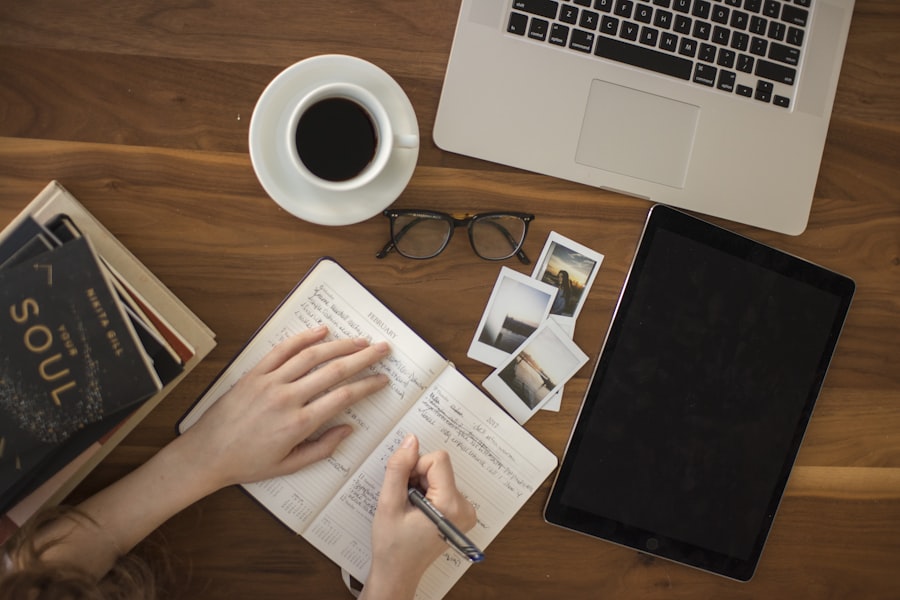
We read more than any generation in history — and understand less than we think.
Why We Keep Consuming But Never Feel Informed
📅 July 29, 2026 | ⏱ 8 min read | Life Insights
You opened your phone at 7:43 this morning. Maybe before you even sat up in bed. A news alert. A tweet thread someone shared. A YouTube video titled something like "EVERYTHING You Need to Know About [insert crisis here]." You watched four minutes of it, got distracted, switched to Instagram, read three captions, then put the phone down to make coffee — and somewhere between the kettle boiling and the first sip, you forgot every single thing you just consumed.
By noon, you'd scrolled through two more news feeds, skimmed a long-form article you bookmarked but never finished, watched a 60-second explainer on a geopolitical conflict, and liked a post about climate data you didn't actually read past the headline. And yet — if someone asked you right now to explain any of it clearly, you'd feel a strange, uncomfortable blankness. Like trying to grab smoke.
Here's the tension: we are the most information-exposed generation in human history, and somehow, a huge number of us walk around feeling confused, anxious, and oddly uninformed. The more we consume, the less we seem to actually know. That's not a personal failure. It's a design problem — and a habit problem — that almost nobody is talking about honestly.
This isn't about doomscrolling in the obvious sense. It's about something quieter and more insidious: the illusion of being informed. The feeling that because you've seen something, you understand it. That because you've consumed, you've learned. That exposure equals knowledge. It doesn't. And the gap between those two things is costing us more than we realize.
What's actually happening when we consume information all day and still feel empty — and is there a way out of it?
📖 In This Blog
This post unpacks why constant information consumption leaves us feeling more confused than clear — and what it actually means to be genuinely informed in 2026.
- The difference between consuming information and actually understanding it
- Why the news and social media are structurally designed to keep you feeling behind
- What the research says about information overload and cognitive load
- Practical shifts that move you from passive consumption to real understanding
📌 Note: This blog shares perspectives, not prescriptions. Think, question, and form your own view.
🧠 The Feeling of Knowing Without Actually Knowing
There's a specific kind of confidence that comes from having seen a headline. You haven't read the article. You definitely haven't read the study the article is citing. But you've seen the headline, maybe the first paragraph, and now you have an opinion. Psychologists have a name for this: the illusion of explanatory depth. You think you understand something far better than you actually do — until someone asks you to explain it from scratch.
Try it right now. Pick any topic you've read about this week — a new AI tool, a political development, a health study. Now try to explain it out loud, in plain language, without looking anything up. Most people get about two sentences in before the gaps appear. The confidence evaporates. What felt like knowledge turns out to have been familiarity — which is a completely different thing.
👉 Familiarity is passive. Knowledge is active. And our information environment is almost entirely optimized for the former.
The problem isn't that we're stupid or lazy. It's that the systems we use to consume information — social media feeds, news apps, short-form video — are built to maximize exposure, not comprehension. They want you to see as many things as possible, not understand any of them deeply. Those are opposite goals, and we've been playing the wrong game without realizing it.
But if exposure isn't the same as understanding, what is actually happening inside our heads when we scroll for hours? The answer is stranger — and more uncomfortable — than most people expect.
"Seeing a thousand things and understanding none of them is not being informed — it's being decorated with facts."
— PrafullTalks
📱 How the Feed Was Designed to Make You Feel Behind
Here's something worth sitting with: the feeling that you're always slightly behind — that there's always one more thing you need to read, one more thread to catch up on, one more explainer before you're "up to date" — that feeling is not accidental. It is the product. The anxiety of incompleteness is what keeps you returning to the feed every 22 minutes (which, incidentally, is roughly how often the average smartphone user checks their device).
News organizations and social platforms both benefit from the same thing: your attention, sustained over time. A story that resolves cleanly and completely is a story you don't need to come back for. So the incentive is to keep stories open, keep the narrative moving, keep you feeling like you're one more article away from finally understanding what's happening. You never quite get there. That's the point.
👉 The feed isn't a window onto the world — it's a treadmill designed to feel like progress while keeping you exactly where you are.
This isn't a conspiracy. It's just economics. Platforms are optimized for engagement, and anxiety is one of the most reliable engagement drivers there is. Outrage, urgency, incompleteness — these are features, not bugs. Knowing this doesn't make you immune to it, but it does change the way you can choose to engage with it.
So if the system is designed to keep us consuming without ever feeling satisfied, what does that constant consumption actually do to the brain? The science here is genuinely unsettling.
📊 What Information Overload Actually Does to Your Brain
Cognitive scientists have been studying information overload since long before smartphones existed — the term was coined in the 1960s — but the scale of the problem today is genuinely new. A 2011 study from the University of California, San Diego estimated that Americans were consuming roughly 34 gigabytes of information per day. That number has only grown since. We are processing more raw data in a single morning than a person in the 1800s might encounter in a week.
The brain has a fixed capacity for what researchers call "working memory" — the mental space where you actively process and make sense of new information. When that space gets overloaded, the brain starts making shortcuts. It stops evaluating sources. It starts accepting the first plausible explanation it encounters. It confuses emotional resonance with factual accuracy. A story that makes you feel something gets remembered; a story that's actually true but dull gets discarded. This is why misinformation spreads so effectively — it's usually more emotionally compelling than the accurate version.
A 2022 Reuters Institute Digital News Report found that 38% of people globally said they actively avoid the news — not because they don't care, but because it feels overwhelming and depressing. That's more than a third of the population essentially tapping out of the information ecosystem, not from apathy, but from exhaustion.
👉 Information overload doesn't make us better thinkers — it makes us more reactive, more susceptible to emotional manipulation, and less capable of sustained reasoning.
And here's the part that should genuinely concern us: the people who consume the most information are not necessarily the best informed. Studies on political knowledge consistently show that heavy news consumers often hold more confident but less accurate beliefs than moderate consumers who read more selectively. More input, paradoxically, can mean less clarity. So what does it actually look like to be genuinely informed — and is it even achievable?
"The brain under information overload doesn't think less — it just starts trusting the wrong things more."
— PrafullTalks
🔍 The Difference Between Being Exposed and Being Informed
Being informed is not a state you reach by consuming enough. It's a process — an active one. It requires slowing down, sitting with something long enough to actually think about it, and being willing to say "I don't fully understand this yet" rather than reaching for the nearest confident-sounding take. That's genuinely hard to do when the entire information environment is pushing you toward speed and certainty.
Think about the last time you read something — really read it, slowly, with your full attention, and then thought about it afterward without immediately moving on to the next thing. For most people, that experience is increasingly rare. Not because we don't want it, but because we've trained ourselves out of it. The habit of rapid consumption is now so deeply ingrained that slow, deliberate reading feels almost uncomfortable. We get restless. We want to move on.
👉 Being genuinely informed means being able to explain something clearly, identify what you don't know, and hold uncertainty without immediately reaching for a hot take.
This is a skill, not a personality trait. It can be built. But it requires consciously choosing depth over breadth — which, in a culture that rewards knowing about everything and understanding nothing, can feel almost countercultural. The good news is that even small shifts in how you consume information can produce dramatically different results. The question is whether you're willing to consume less in order to actually understand more.
But before we get to what those shifts look like, it's worth asking: why do we keep doing this even when we know it isn't working? What's the pull that keeps us reaching for the feed even when we know we'll feel worse afterward?
🪤 Why We Can't Stop Even When We Know It's Not Working
Part of it is habit — the phone reaches for us as much as we reach for it, and the muscle memory of checking is now so automatic that it happens before conscious thought kicks in. But there's something deeper going on too. Consuming information feels like doing something. It feels productive. It feels like civic participation, like staying engaged, like being a responsible adult who knows what's happening in the world. Stopping feels like giving up, or checking out, or becoming one of those people who "doesn't care."
There's also a social dimension that's easy to underestimate. Not knowing about a major news story in a conversation with colleagues or friends carries a real social cost. So we consume partly to maintain social currency — to have something to say, to not be the person who missed it. The fear of being uninformed in front of others drives consumption even when the consumption itself isn't producing genuine understanding.
And then there's the dopamine loop. Every new piece of information — every notification, every breaking news alert — carries a small hit of novelty. The brain is wired to seek novelty; it's an evolutionary feature. The problem is that the modern information environment has turned that feature into a lever that can be pulled indefinitely, producing the sensation of stimulation without any of the actual rewards that novelty was supposed to deliver.
👉 We keep consuming because it feels like engagement — but real engagement with an idea requires stillness, not speed.
Recognizing this pattern is genuinely the first step, not in a self-help cliché way, but in a practical sense: you can't change a behavior you haven't noticed. And once you start noticing how often you reach for information as a comfort mechanism rather than a genuine need, the whole thing starts to look different. Which brings us to the part that actually matters: what do you do instead?
"Consuming information to feel less anxious about the world is like drinking saltwater to feel less thirsty."
— PrafullTalks
🛠 What It Actually Looks Like to Consume Better
This isn't a "digital detox" pitch. You don't need to delete your apps or move to a cabin. What actually helps is something more sustainable and less dramatic: intentional narrowing. Instead of trying to stay across everything, pick two or three topics that genuinely matter to you and go deep on those. Read the long piece, not just the summary. Follow the thread back to the original source. Sit with the complexity instead of reaching for the simplified take.
A useful test: after consuming something, can you explain it to someone else in plain language? If not, you haven't really learned it — you've just been exposed to it. This single question, asked honestly, changes the way you engage with information almost immediately. It shifts you from passive reception to active processing. It's uncomfortable at first, because it reveals how little most of what we consume actually sticks. But that discomfort is information too.
👉 The goal isn't to know about more things — it's to actually understand a few things well enough that they change how you think and act.
Consider building what some researchers call a "slow news" practice: one longer read per day, fully finished, with your phone face-down. A weekly newsletter from a writer you trust over a daily scroll through a feed you don't. A podcast episode listened to on a walk, without multitasking, so you can actually think about what's being said. None of this is revolutionary. All of it requires choosing depth over the comfortable illusion of breadth.
The world will keep producing more information than any human can process. That's not going to change. What can change is your relationship to that fact — whether you chase the impossible completeness the feed promises, or whether you decide that understanding ten things well is worth more than skimming ten thousand things and retaining none of them.
✅ Key Takeaways
- Exposure to information is not the same as understanding it — familiarity and knowledge are fundamentally different things.
- News feeds and social platforms are structurally designed to keep you feeling behind, not to help you feel genuinely informed.
- Information overload impairs reasoning — heavy consumers are often more confident but less accurate than selective readers.
- We consume compulsively partly for social currency and partly because it mimics the feeling of doing something useful, even when it isn't.
- The shift from passive consumption to genuine understanding requires intentional narrowing: fewer topics, more depth, and the honest question — "can I actually explain this?"
Remember that morning scroll — the news alert, the tweet thread, the four-minute video, the Instagram captions, the bookmarked article you never finished? That wasn't a bad morning. That was a completely ordinary one. And that's exactly the problem. We've normalized a relationship with information that leaves us simultaneously overstimulated and underprepared, anxious and oddly empty, feeling like we've done something when we've mostly just passed time.
The honest truth is that being genuinely informed in 2026 is a countercultural act. It means resisting the pull of the feed, accepting that you cannot and should not try to know about everything, and choosing to understand a few things deeply rather than skim everything shallowly. It means sitting with uncertainty instead of grabbing the nearest confident take. It means asking "do I actually understand this?" more often than "have I seen this?"
That shift — from consumer to thinker — doesn't require a dramatic lifestyle change. It requires a small, daily act of choosing differently. One long read instead of thirty headlines. One conversation where you admit you don't fully understand something instead of performing confidence you don't have. One morning where the phone stays face-down until you've had a thought that's actually yours.
What's one thing you consumed this week that you could actually explain clearly right now — and what does your answer tell you about how you've been spending your attention?
Jai Hind.
💬 Your Turn
- When was the last time you read something slowly and completely — and actually thought about it afterward? What was it?
- Do you think you consume information to genuinely understand the world, or mostly to feel like you're keeping up? Be honest.
- What's one topic you've been "following" for months but still couldn't explain clearly to someone else — and why do you think that is?
Drop your thoughts in the comments below 👇
If this made you think, share it with one person who needs to read this.

|
Prafull Ranjan Content Creator & Observer of Everyday Life I write about the things we all feel but rarely say out loud. Life, society, youth, and everything in between. |
Did you find this post helpful?
Never miss a post!
Get fresh insights delivered to your inbox.
OR
No spam. Unsubscribe anytime.


0 Comments
We’d love to hear your thoughts. Feel free to comment below!