


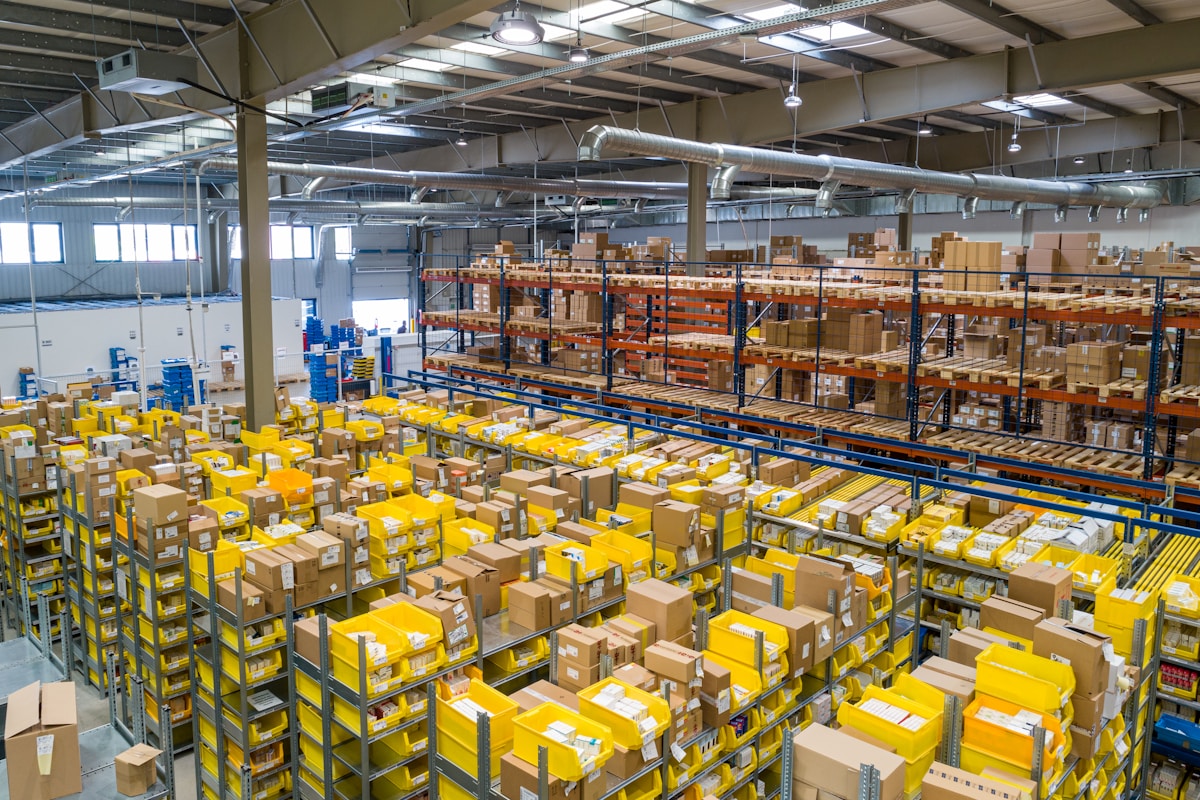
Inventory — The products and materials a business keeps to serve its customers
What is Inventory? A Simple Guide for Students & Professionals
📅 Published: March 13, 2026 | ⏱️ 6 min read | 📂 Category: Business Basics
📌 In This Blog
In this post, you'll learn:
- What inventory means in simple, everyday language
- The four main types of inventory with clear examples
- Real-world examples from Walmart and Flipkart
- Why inventory management is critical for any business
- What happens when inventory is managed poorly
- Interview questions and key takeaways to remember
Whether you're a student preparing for exams or an interview, or a professional brushing up on fundamentals, this guide will make inventory crystal clear.
🤔 What is Inventory? (Simple Meaning)
Inventory is the stock of products or materials that a business keeps so it can sell to customers or continue producing its goods and services.
In very simple words:
Inventory = The things a company keeps to sell or use.
For example, if you own a small shop and keep 100 chocolate bars to sell, those chocolate bars are your inventory. Simple as that.
Businesses keep inventory for three core reasons:
- To resell products directly to customers
- To use as inputs for producing finished products
- To support day-to-day operations of the business
💡 Did You Know? According to global supply chain studies, excess and poorly managed inventory costs businesses trillions of dollars each year. Inventory management is one of the most critical skills in operations and supply chain management.
📦 Types of Inventory
Not all inventory is the same. There are different types depending on the stage of production and the kind of business. Here are the four main types:
1. Raw Materials
Raw materials are the basic inputs that a business uses to manufacture or produce a finished product. These are items in their most original form — before any production has taken place.
Examples: Flour and sugar in a bakery, wood and nails in a furniture factory, steel sheets in an automobile plant, cotton yarn in a textile factory.
2. Work-In-Progress (WIP)
Work-in-progress inventory refers to products that are partially made — they have left the raw material stage but are not yet complete and ready for sale.
Examples: A half-assembled car on a factory production line, a phone that has its circuit board fitted but the casing not yet attached, bread dough that is resting before baking.
3. Finished Goods
Finished goods are products that have completed the manufacturing process and are fully ready to be sold to customers.
Examples: A packaged smartphone sitting in a retailer's store, a carton of milk ready on a supermarket shelf, a manufactured car at a dealership showroom.
4. MRO Supplies — Maintenance, Repair & Operations
MRO supplies are items a business uses to keep its operations running smoothly. They are not directly part of the product being sold, but they are essential for the business to function.
Examples: Machine lubricant oil in a factory, cleaning supplies in a warehouse, printer paper and stationery in an office, spare parts kept for machinery repair.
| Type | Stage | Example |
|---|---|---|
| Raw Materials | Before production | Flour in a bakery |
| Work-In-Progress | During production | Half-assembled car |
| Finished Goods | After production — ready for sale | Packaged smartphone in a store |
| MRO Supplies | Operational support | Machine oil, cleaning supplies |
🛒 Real-World Example: Walmart
Let's understand inventory with a globally recognized example — Walmart, the world's largest retail chain.
Walmart does not manufacture most of the products it sells. It purchases them from suppliers and sells them directly to customers. At any given time, its inventory across thousands of stores might include:
- 500 bags of rice in the grocery section
- 1,000 shampoo bottles in personal care
- 200 televisions in electronics
- 300 smartphones ready for sale
This entire stock — across every product category and every store — is Walmart's inventory.
⚠️ The Two Big Inventory Problems:
Problem 1 — Too Little Stock (Stockout): If Walmart runs out of shampoo, customers leave the store without buying. The sale is permanently lost, and the customer may switch to a competitor next time.
Problem 2 — Too Much Stock (Overstocking): If Walmart orders 2,000 televisions but only 200 sell, the remaining 1,800 units are sitting in the warehouse. That is a massive amount of money locked in unsold goods — which affects cash flow and profitability.
Good inventory management means finding the balance:
Not too much. Not too little. Just the right amount — at the right time.
📦 Real-World Example: Flipkart
Now consider Flipkart, one of India's largest e-commerce platforms. Unlike a physical store, customers never walk into Flipkart's warehouses — yet inventory management is absolutely central to Flipkart's business.
Flipkart's inventory at any point includes:
- Laptops, phones, and accessories stocked in fulfilment warehouses across the country
- Products in transit between warehouses and delivery hubs
- Returned products being inspected and prepared for resale
- Seasonal stock built up before major sales events like Big Billion Days
Even though the customer sees only a website, there are thousands of SKUs (Stock Keeping Units — individual product entries) being managed behind the scenes. When you click "Add to Cart," Flipkart's system instantly checks inventory availability, reserves the item, and triggers the fulfilment chain.
💡 Real Fact: During Flipkart's Big Billion Days sale, the platform processes millions of orders in just a few days. This requires months of inventory planning in advance — stocking the right products in the right warehouses closest to where demand is expected.
💡 Why Inventory Management is Important
Inventory management is not just about counting products on a shelf. It has a direct impact on a company's profits, customer experience, and overall business health.
1. Sales Depend on Inventory
If you don't have the product available, you simply cannot make the sale. For a retail or e-commerce business, stockouts directly translate to lost revenue — and often, lost customers who go to competitors and don't come back.
2. Controls Business Costs
Holding inventory costs money — warehouse space, insurance, handling, and the risk of products becoming obsolete. Too much inventory means too much of the company's money is tied up in stock that isn't generating returns. Too little means missed sales. The goal is always to minimize holding costs while maintaining availability.
3. Improves Customer Satisfaction
Customers expect the products they want to be available when they want them. Whether it's a customer walking into a D-Mart store or ordering on Amazon, the experience is directly connected to inventory availability. Fast, reliable fulfilment builds customer trust and loyalty.
4. Enables Better Business Decisions
Inventory data tells a business which products are selling fast (fast-moving) and which are sitting unsold (slow-moving or dead stock). This insight helps companies decide which products to promote, which to discount, which to reorder more of, and which to discontinue entirely.
5. Impacts Financial Statements
Inventory is recorded as a current asset on a company's balance sheet. Its valuation directly affects financial reporting, income tax calculations, and the company's overall financial health as perceived by investors and banks. Poor inventory accounting can lead to compliance issues and financial misreporting.
🎯 The Golden Formula of Inventory Management
Right Product + Right Quantity + Right Place + Right Time = Good Inventory Management
This simple formula is the foundation of every inventory strategy — from a small kirana store to a global company like Amazon.
⚠️ What Happens When Inventory Is Poorly Managed?
Poor inventory management can seriously damage a business. Here are the most common consequences:
- Cash Flow Problems: Money gets locked in unsold stock, leaving insufficient funds for daily operations or new investments
- Warehouse Overflow: Too much stock leads to storage space running out, increasing warehouse and logistics costs
- Expired or Obsolete Products: Perishable goods spoil, and electronics or fashion items become outdated — both result in direct financial losses
- Customer Dissatisfaction: Stockouts lead to unfulfilled orders, delayed deliveries, and frustrated customers who leave negative reviews
- Reduced Profits: Excessive discounting of overstock, wastage of perishables, and emergency procurement to cover shortages all eat directly into profit margins
💡 Real Incident: In 2012, UK supermarket chain Tesco faced a significant problem with excess inventory and poor stock management across its stores — contributing to billions of pounds in write-offs and a major decline in profits. It was a key lesson for the retail industry globally on the cost of poor inventory control.
🛠️ How Businesses Manage Inventory
Modern businesses use various tools and techniques to manage inventory efficiently:
1. Inventory Management Software
Dedicated software like Zoho Inventory, Unicommerce (popular in India), and NetSuite help businesses track stock levels in real time, set automatic reorder points, and generate reports.
2. ERP Systems
Large enterprises use ERP platforms like SAP or Oracle where inventory management is integrated with finance, procurement, and sales — giving a complete, real-time view of stock across the entire business.
3. JIT — Just-In-Time Inventory
A strategy where products are ordered and received only when needed — minimizing storage costs. Made famous by Toyota in its manufacturing operations, JIT is now widely used across industries.
4. ABC Analysis
A method of categorizing inventory into three groups — A (high-value, low-quantity items that need close monitoring), B (moderate value and quantity), and C (low-value, high-quantity items). This helps businesses focus their attention where it matters most.
🎓 Interview Questions on Inventory
If you're preparing for interviews in supply chain, operations, or business analyst roles, here are key questions to know:
Q1: What is inventory?
A: Inventory is the stock of goods and materials that a business holds for the purpose of resale, production, or operational use. It includes raw materials, work-in-progress, finished goods, and MRO supplies. Proper inventory management ensures optimal stock levels, cost control, and consistent customer satisfaction.
Q2: What are the types of inventory?
A: The four main types are: Raw Materials (inputs before production begins), Work-In-Progress or WIP (partially manufactured goods), Finished Goods (completed products ready for sale), and MRO Supplies (materials used to support business operations, not directly sold). Each type requires a different management approach.
Q3: What are the consequences of poor inventory management?
A: Poor inventory management leads to stockouts (lost sales), overstocking (capital tied in unsold goods), increased storage costs, product expiry or obsolescence, reduced cash flow, customer dissatisfaction, and ultimately lower profits. It also affects a company's financial statements and can trigger compliance issues.
Q4: What is the difference between inventory and stock?
A: In everyday usage, "inventory" and "stock" are often used interchangeably. However, technically, "stock" typically refers to finished goods available for sale, while "inventory" is a broader term that includes raw materials, WIP, and MRO supplies in addition to finished goods. In accounting and supply chain, "inventory" is the preferred term.
💡 Pro Tip: When answering interview questions on inventory, always mention the four types and give a real-world example for each. Referencing well-known companies like Walmart, Amazon, or Flipkart instantly makes your answer more credible and memorable to interviewers.
🔗 Related Concepts You Should Know
Once you understand inventory, these related concepts will be much easier to grasp:
- Supply Chain Management (SCM): The end-to-end process of getting goods from suppliers to customers — inventory is a key component
- Procurement: The process of sourcing and purchasing raw materials and goods to replenish inventory
- Warehouse Management: The operational management of physical storage facilities where inventory is held
- Demand Forecasting: Predicting future customer demand to plan inventory levels in advance
- ERP Systems: Enterprise software that integrates inventory with finance, procurement, and sales across an organization
👉 Explore more Business Basics guides →
🎯 Key Takeaways
Let's recap what we learned:
- ✅ Inventory is the stock of products or materials a business keeps for selling, producing, or running its operations
- ✅ There are four types — Raw Materials, Work-In-Progress, Finished Goods, and MRO Supplies
- ✅ Too much inventory locks capital in unsold goods; too little inventory means lost sales
- ✅ Good inventory management is about balance — the right product, at the right quantity, in the right place, at the right time
- ✅ Modern businesses use software and ERP systems like SAP and Zoho to manage inventory efficiently
- ✅ Poor inventory management has real consequences — reduced profits, unhappy customers, and cash flow problems

About the Author
Prafull Ranjan
Content Creator & Observer of Everyday Life
I write practical stories and simple guides about life, technology, and social issues – that everyone can understand.
Tags:
Published on PrafullTalks | Home | All Business Posts | Tech Simplified
Did you find this post helpful?
Never miss a post!
Get fresh insights delivered to your inbox.
OR
No spam. Unsubscribe anytime.


0 Comments
We’d love to hear your thoughts. Feel free to comment below!