


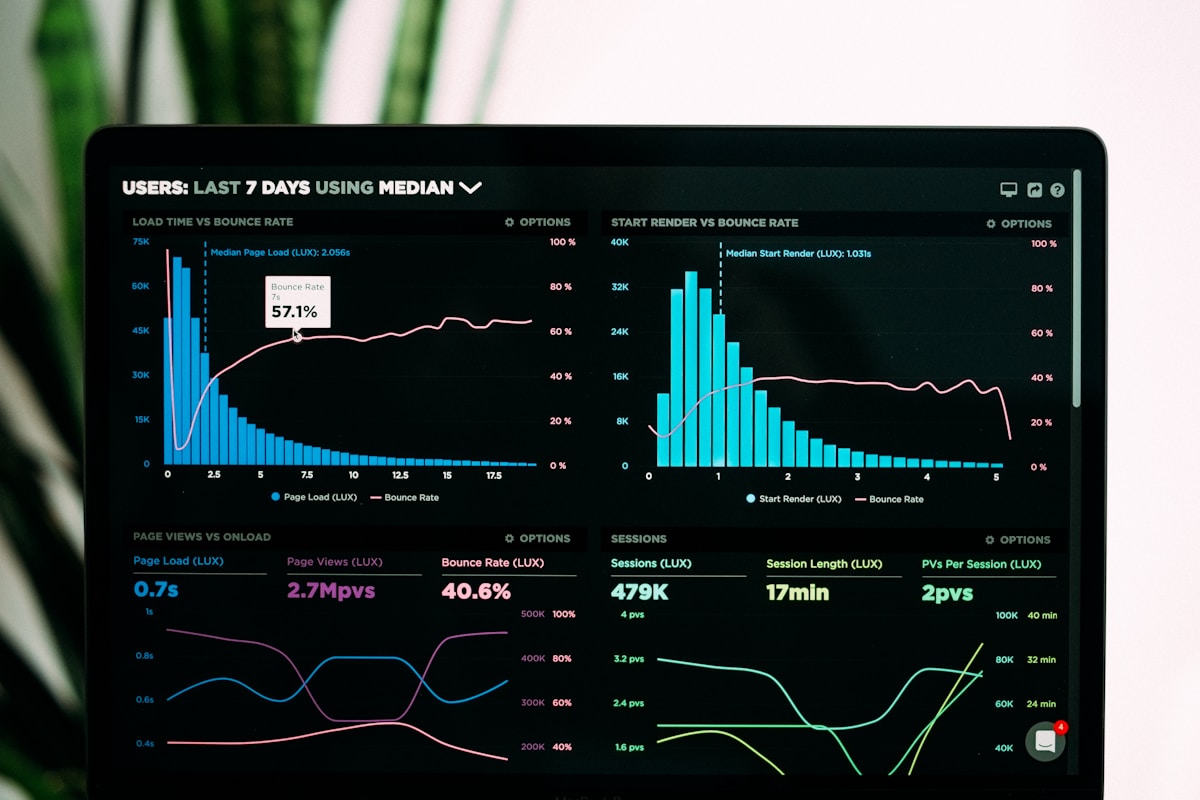
Scalability - the ability to grow and handle increasing demand seamlessly
What is Scalability? A Complete Guide for Everyone
📅 Published: March 04, 2026 | ⏱️ 11 min read | 📂 Category: Tech Simplified
📌 In This Blog
In this post, you'll learn:
- What scalability means with simple everyday analogies
- Vertical vs Horizontal scaling explained in detail
- When to use which type of scaling strategy
- Real examples from Netflix, Amazon, WhatsApp, Flipkart
- How companies handle traffic spikes (Black Friday, Big Billion Days)
- Scalability challenges and solutions
- Interview questions with detailed professional answers
🤔 What is Scalability?
Scalability is the ability of a system to handle increased workload – more users, more data, more requests, more transactions – by adding more resources (servers, memory, processing power) without suffering performance degradation.
In simple words: A scalable system can grow smoothly as demand increases. When traffic doubles, the system doesn't crash or slow down – it adapts and continues to perform well.
Simple Everyday Analogies
Analogy 1: Restaurant Expansion
🍽️ Scenario: Your favorite restaurant used to serve 50 customers daily. After a viral food blogger's review, 200 customers show up daily.
Two ways to scale:
- Option 1 (Vertical Scaling): Make the kitchen bigger, buy a bigger stove, hire one master chef who can cook faster → upgrading the same restaurant
- Option 2 (Horizontal Scaling): Open 3 more restaurant branches in different neighborhoods → each branch handles 50 customers
Result: All 200 customers served quickly, nobody waits 2 hours for food. That's scalability!
Analogy 2: Highway Traffic
A 2-lane highway gets congested as the city grows. Two scaling options:
- Vertical Scaling: Expand the highway from 2 lanes to 6 lanes (same highway, more capacity)
- Horizontal Scaling: Build parallel highways (multiple routes to the same destination)
Both reduce traffic congestion, but in different ways.
💡 Real Impact: During Flipkart's Big Billion Days sale in 2025, traffic spiked from 100,000 to 10 million concurrent users in 1 hour. Scalability allowed Flipkart to handle this 100x surge without crashing. That's ₹15,000 crores in sales in 24 hours – only possible with proper scalability!
📊 Types of Scalability: Vertical vs Horizontal
There are two fundamental approaches to scaling systems. Let me explain each in detail:
1. Vertical Scaling (Scaling Up) 📈
What it means: Add more power to your existing machine – more RAM, faster CPU, bigger hard drive, better network card.
Think of it like: Upgrading your phone from 4GB RAM to 12GB RAM. Same phone, more power.
Real-World Example: Database Server Upgrade
Scenario: An e-commerce startup's database server is slowing down.
Vertical Scaling Solution:
- Current: Server with 32GB RAM, 8 CPU cores, 1TB SSD
- Upgrade to: 256GB RAM, 64 CPU cores, 10TB NVMe SSD
- Time to upgrade: 2-4 hours of downtime
- Cost: $5,000 → $50,000 (10x cost for 8x performance)
Result: Database can now handle 10x more queries per second.
Advantages of Vertical Scaling ✅
- Simplicity: No changes to application code needed. Just upgrade hardware and restart.
- Easier Management: One powerful machine is easier to manage than 10 smaller machines.
- No Network Overhead: Everything runs on one machine, no network latency between components.
- Data Consistency: All data in one place, no synchronization issues.
- Quick Fix: Fast to implement when you need immediate performance boost.
Disadvantages of Vertical Scaling ❌
- Hardware Limits: You can't add infinite RAM or CPUs to one machine. Eventually, you hit a ceiling.
- Expensive: High-end servers are very costly. Doubling capacity often more than doubles the cost.
- Single Point of Failure: If that one powerful server crashes, your entire system goes down.
- Downtime Required: Upgrading usually requires shutting down the server temporarily.
- Diminishing Returns: Going from 8GB to 16GB RAM gives big improvement, but 512GB to 1TB gives less noticeable gain.
When to Use Vertical Scaling?
- Small to medium-sized applications
- When application isn't designed for distributed architecture
- Databases that require strong consistency (traditional SQL databases)
- Quick fixes when horizontal scaling isn't feasible
- When simplicity is more important than infinite scalability
2. Horizontal Scaling (Scaling Out) 📊
What it means: Add more machines to your system. Instead of one powerful server, have 10, 100, or 10,000 servers working together.
Think of it like: Instead of one super-strong person carrying 100kg, have 10 people each carrying 10kg.
Real-World Example: WhatsApp Message Handling
Challenge: WhatsApp delivers 100 billion messages daily across 2.8 billion users.
Horizontal Scaling Solution:
- Not: One massive supercomputer handling all 100 billion messages
- Instead: 10,000+ commodity servers, each handling ~10 million messages
- Load Balancer: Distributes incoming messages across all servers
- User Distribution: Users A-Z distributed across different server clusters
Scaling Process:
- 2010: 1 million users → 10 servers
- 2015: 900 million users → 1,000 servers
- 2020: 2 billion users → 5,000 servers
- 2026: 2.8 billion users → 10,000+ servers
How they scale: Every month, add 50-100 new servers as user base grows. Each new server costs $5,000 but adds capacity for 100,000 more users.
Advantages of Horizontal Scaling ✅
- Unlimited Scalability: No theoretical limit. Need more capacity? Add more servers. Netflix uses 100,000+ servers worldwide.
- Cost-Effective: Use cheap commodity servers instead of expensive specialized hardware. 100 x $5,000 servers vs 1 x $500,000 supercomputer.
- Fault Tolerance: If 1 out of 100 servers fails, system continues with 99 servers. No complete downtime.
- Zero-Downtime Scaling: Add new servers while system is running. Users don't even notice.
- Geographic Distribution: Place servers in different countries to serve users faster (low latency).
- Flexible: Scale up during peak hours (add 100 servers), scale down at night (remove 50 servers to save costs).
Disadvantages of Horizontal Scaling ❌
- Complexity: Managing 1,000 servers is much harder than managing 1 server. Need specialized tools (Kubernetes, Docker Swarm).
- Data Consistency Challenges: When data is spread across many servers, keeping it synchronized is difficult.
- Network Dependency: Servers communicate over network. Network failures can cause issues.
- Application Re-Architecture: Your code must be designed for distributed systems. Can't just deploy existing monolithic app on 100 servers.
- Licensing Costs: Some software charges per server. 100 servers = 100x licensing fees.
When to Use Horizontal Scaling?
- Large-scale applications (millions of users)
- Cloud-native applications
- When you need better than 99.99% uptime
- Services with unpredictable traffic spikes
- Global applications serving users worldwide
- When vertical scaling has reached its limits
⚖️ Vertical vs Horizontal Scaling: Side-by-Side
| Aspect | Vertical Scaling (Scale Up) | Horizontal Scaling (Scale Out) |
|---|---|---|
| Approach | Add more power to existing machine | Add more machines to the system |
| Scalability Limit | ❌ Limited by hardware constraints | ✅ Theoretically unlimited |
| Cost | ❌ Expensive (exponential cost growth) | ✅ Cost-effective (linear growth) |
| Complexity | ✅ Simple to implement | ❌ Complex architecture required |
| Downtime | ❌ Usually requires downtime | ✅ Zero downtime deployment |
| Fault Tolerance | ❌ Single point of failure | ✅ High - multiple redundant servers |
| Performance Gain | Immediate, predictable | Depends on load distribution efficiency |
| Best For | Databases, legacy apps, small-medium scale | Web apps, microservices, large-scale systems |
| Examples | Upgrading database server RAM from 32GB to 256GB | Google using 1 million+ servers worldwide |
🌍 Real-World Scalability Success Stories
Example 1: Netflix – Masters of Horizontal Scaling
The Challenge: Stream high-quality video to 260 million subscribers across 190 countries simultaneously.
Scaling Strategy:
- Content Delivery Network (CDN): 15,000+ servers in 200+ cities worldwide storing popular shows
- Regional Optimization: "Stranger Things" cached on 500 servers in USA, 200 in India, 300 in Brazil
- Dynamic Scaling:
- Friday 8 PM (peak time): 100,000 servers active
- Tuesday 3 AM (low traffic): 30,000 servers active
- Saves millions in cloud costs by scaling down during off-peak
- Load Balancing: When you press play, system chooses nearest server with available bandwidth
Results:
- Can handle 1 billion hours of streaming per week
- 99.99% uptime despite serving 260 million users
- When new season of "Wednesday" released, 50 million viewers in first week – system didn't crash
Example 2: Amazon – Hybrid Scaling During Black Friday
Normal Day: Amazon handles 10 million transactions
Black Friday: 200 million transactions in 24 hours (20x spike)
How Amazon Scales:
Preparation (2 months before):
- Horizontal Scaling: Add 10,000 temporary servers to AWS infrastructure
- Database Optimization: Vertical scaling – upgrade master database from 128GB to 512GB RAM
- Caching Layer: 5,000 Redis cache servers to reduce database load
- CDN Expansion: Add 1,000 edge locations for product images
During Sale:
- Auto-scaling: Automatically add servers every 5 minutes as traffic increases
- Load distribution: Each server handles max 5,000 requests/second, then traffic routed to next server
- Database read replicas: 50 read-only database copies handle product browsing
After Sale:
- Scale down from 50,000 servers to 10,000 servers over 48 hours
- Keep some extra capacity for holiday season
Example 3: IRCTC – Handling Tatkal Booking Rush
The Problem: At 10:00 AM sharp, millions try to book train tickets simultaneously (Tatkal time).
Before Scalability (2015):
- Website crashed every Tatkal time
- Users got "Server Error" messages
- People complained on social media daily
After Implementing Scalability (2020-2026):
Horizontal Scaling Solution:
- 9:30 AM: System detects Tatkal time approaching → auto-scales from 100 to 500 servers
- 9:55 AM: Adds 300 more servers (total 800)
- 10:00 AM: Peak traffic hits – 2 million concurrent users
- 10:15 AM: Traffic reduces → gradually scales down to 300 servers
- 11:00 AM: Back to normal 100 servers
Technology Used:
- Cloud bursting: Temporarily use Amazon AWS servers during peak
- Queue management: Users wait in virtual queue instead of hammering server
- Smart load balancing: Distribute users across servers based on train route
Result: 99.5% uptime during Tatkal bookings, users successfully book tickets.
Example 4: Zoom – Scaling During COVID Pandemic
The Crisis:
- January 2020: 10 million daily meeting participants
- April 2020: 300 million daily meeting participants (30x growth in 3 months!)
Zoom's Emergency Scaling Response:
- Massive Horizontal Scaling:
- Added 10,000+ servers in 6 weeks
- Partnered with Oracle Cloud, AWS, Azure for emergency capacity
- Geographic Expansion:
- Opened 14 new data centers in 2 months
- Deployed servers in India, Brazil, South Africa for regional capacity
- Optimization:
- Compressed video quality options (360p for slow connections)
- Optimized bandwidth usage – reduced data usage by 40%
- Load Distribution:
- Meetings distributed globally based on participant locations
- If US servers full, route to European servers with spare capacity
Impressive Stats: Scaled infrastructure by 3000% in 90 days. Maintained 99.9% uptime despite unprecedented growth.
⚠️ Common Scalability Challenges & Solutions
Challenge 1: Database Bottleneck
The Problem: Your web servers can scale horizontally easily, but your database is a single server that becomes the bottleneck.
Real Scenario: E-commerce site adds 10 more web servers, but all 10 servers query the same database → database overwhelmed.
Solutions:
- Database Replication: Create read-only copies of database. Write queries go to master, read queries distributed across 10 replicas.
- Caching: Use Redis/Memcached to cache frequently accessed data. 80% of queries never hit database.
- Database Sharding: Split database horizontally – Users A-M on DB1, Users N-Z on DB2.
- NoSQL Databases: Use horizontally scalable databases like MongoDB, Cassandra for certain data types.
Challenge 2: Session Management
The Problem: User logs into Server A, next request goes to Server B which doesn't recognize the user.
Solutions:
- Sticky Sessions: Once user connects to Server A, all their requests go to Server A (but reduces flexibility)
- Centralized Session Store: Store sessions in Redis cluster accessible by all servers
- Stateless Architecture: Use JWT tokens – session data embedded in token, no server-side storage needed
Challenge 3: File Storage at Scale
The Problem: Users upload millions of photos/videos. Can't store all on one server's hard drive.
Solutions:
- Object Storage: Use AWS S3, Google Cloud Storage – designed for infinite scalability
- CDN Integration: Cloudflare, Akamai cache files worldwide for fast access
- Distributed File Systems: HDFS (Hadoop), GlusterFS spread files across many servers
Challenge 4: Cost Management
The Problem: Running 1,000 servers 24/7 is expensive, but you only need that capacity for 4 hours daily.
Solutions:
- Auto-Scaling Policies: Scale up when CPU > 70%, scale down when CPU < 30%
- Scheduled Scaling: Add servers at 9 AM, remove at 6 PM (business hours)
- Spot Instances: Use cheaper "spot" cloud servers for non-critical workloads
- Serverless Architecture: AWS Lambda, Google Cloud Functions – only pay when code actually runs
📈 Measuring Scalability
How do you know if your system is actually scalable? Here are key metrics:
✅ Key Scalability Metrics:
- Response Time: Does your app respond in 200ms even with 10x traffic?
- Throughput: Can you handle 10,000 requests/second vs 1,000?
- Resource Utilization: When you double servers, do you get double capacity?
- Cost Efficiency: Linear cost growth with load (doubling load doubles cost, not 10x)
- Scalability Factor: If adding 1 server improves performance by 90% (not 100% due to overhead), factor is 0.9
- Breaking Point: At what load does the system start degrading? 50K users? 500K users?
🎓 Interview Questions on Scalability
Q1: What is scalability in system design?
A: Scalability is the ability of a system to handle increased workload (more users, data, or requests) by adding resources without performance degradation. A scalable system maintains or improves performance as demand grows. There are two types: (1) Vertical scalability – adding more power to existing machines (more RAM, CPUs), and (2) Horizontal scalability – adding more machines to distribute the load. Example: Netflix scales horizontally to handle 260 million users by using thousands of servers worldwide instead of one super-powerful server.
Q2: Explain the difference between vertical and horizontal scaling with an example.
A: Vertical scaling means upgrading a single server's hardware – adding more RAM, faster CPU, bigger storage. Example: Database server upgraded from 32GB to 256GB RAM. Advantages: simple implementation, no code changes. Disadvantages: hardware limits, expensive, single point of failure. Horizontal scaling means adding more servers to distribute workload. Example: WhatsApp uses 10,000+ servers to handle 2.8 billion users. Advantages: unlimited scalability, cost-effective, fault-tolerant. Disadvantages: complex architecture, data synchronization challenges. Most modern large-scale systems use horizontal scaling because vertical scaling hits limits eventually.
Q3: What are the main challenges when scaling a system horizontally?
A: Main challenges include: (1) Data consistency – keeping data synchronized across multiple servers requires complex protocols, (2) Session management – user sessions must be accessible across all servers (solved with centralized session stores like Redis), (3) Load balancing – efficiently distributing requests across servers to prevent hotspots, (4) Database scalability – databases are harder to scale than web servers (solved with replication, sharding, caching), (5) Distributed transactions – ensuring ACID properties across multiple servers, and (6) Complexity – managing thousands of servers requires sophisticated orchestration tools like Kubernetes.
Q4: How do you decide whether to scale vertically or horizontally?
A: Decision factors: (1) Application architecture – If app is monolithic and can't be distributed, start with vertical. If microservices-based, go horizontal. (2) Scale requirements – Need to handle millions of users? Must go horizontal. Small-medium scale? Vertical is simpler. (3) Budget – Limited budget favors horizontal (use commodity servers). (4) Fault tolerance needs – High availability requirements favor horizontal (redundancy). (5) Technical expertise – Vertical is simpler to implement. Horizontal requires distributed systems knowledge. Best practice: Start vertical for simplicity, plan for horizontal as you grow. Many systems use hybrid approach – vertical scaling for databases, horizontal for web/app servers.
Q5: How does load balancing work in horizontally scaled systems?
A: Load balancing distributes incoming requests across multiple servers. Common algorithms: (1) Round Robin – requests go to servers in rotation (Server 1, 2, 3, 1, 2...), (2) Least Connections – send request to server with fewest active connections, (3) IP Hash – same user always goes to same server (enables session persistence), (4) Weighted – more powerful servers get more requests. Load balancers monitor server health (heartbeat checks every 5 seconds) and remove failed servers from rotation. Example: AWS Elastic Load Balancer distributes traffic across EC2 instances, automatically adds/removes servers based on health checks. Advanced: Layer 7 load balancers can route based on URL path (/api requests to API servers, /images to CDN).
Q6: Can you describe a real-world scenario where poor scalability caused system failure?
A: In 2018, BookMyShow crashed during Avengers: Endgame ticket sales. Problem: Millions tried booking simultaneously at midnight. Their system wasn't horizontally scalable – database was single server bottleneck. All web servers queried one database which got overwhelmed with 500K requests/second. Result: 2-hour outage, angry customers, lost revenue. Solution they implemented: (1) Database read replicas (10 copies) for ticket availability queries, (2) Caching layer (Redis) for seat maps, (3) Queue system – users wait in virtual queue instead of hammering database, (4) Auto-scaling – automatically add 100 servers when traffic spikes, (5) CDN for static content. After fixes: Successfully handled 2 million concurrent users for next major release.
🎯 Key Takeaways
- ✅ Scalability = ability to handle growth without performance loss
- ✅ Vertical scaling = more power to one machine (simple but limited)
- ✅ Horizontal scaling = more machines (complex but unlimited)
- ✅ Trade-offs: Vertical is simpler and cheaper initially; Horizontal is more scalable and fault-tolerant long-term
- ✅ Real examples: Netflix (15K servers), WhatsApp (10K+ servers), Amazon (scales 5x for Black Friday)
- ✅ Major challenges: Database bottlenecks, session management, data consistency, cost control
- ✅ Solutions: Load balancing, caching, database replication, auto-scaling, CDNs
- ✅ Hybrid approach works best – vertical for databases, horizontal for web/app layers
- ✅ Cloud platforms (AWS, Azure, GCP) make horizontal scaling easier with auto-scaling features
- ✅ Plan for scale early – redesigning a monolith for horizontal scaling later is extremely difficult and expensive

Published on PrafullTalks | Home | All Tech Posts | Life Insights
Did you find this post helpful?
Never miss a post!
Get fresh insights delivered to your inbox.
OR
No spam. Unsubscribe anytime.


0 Comments
We’d love to hear your thoughts. Feel free to comment below!